
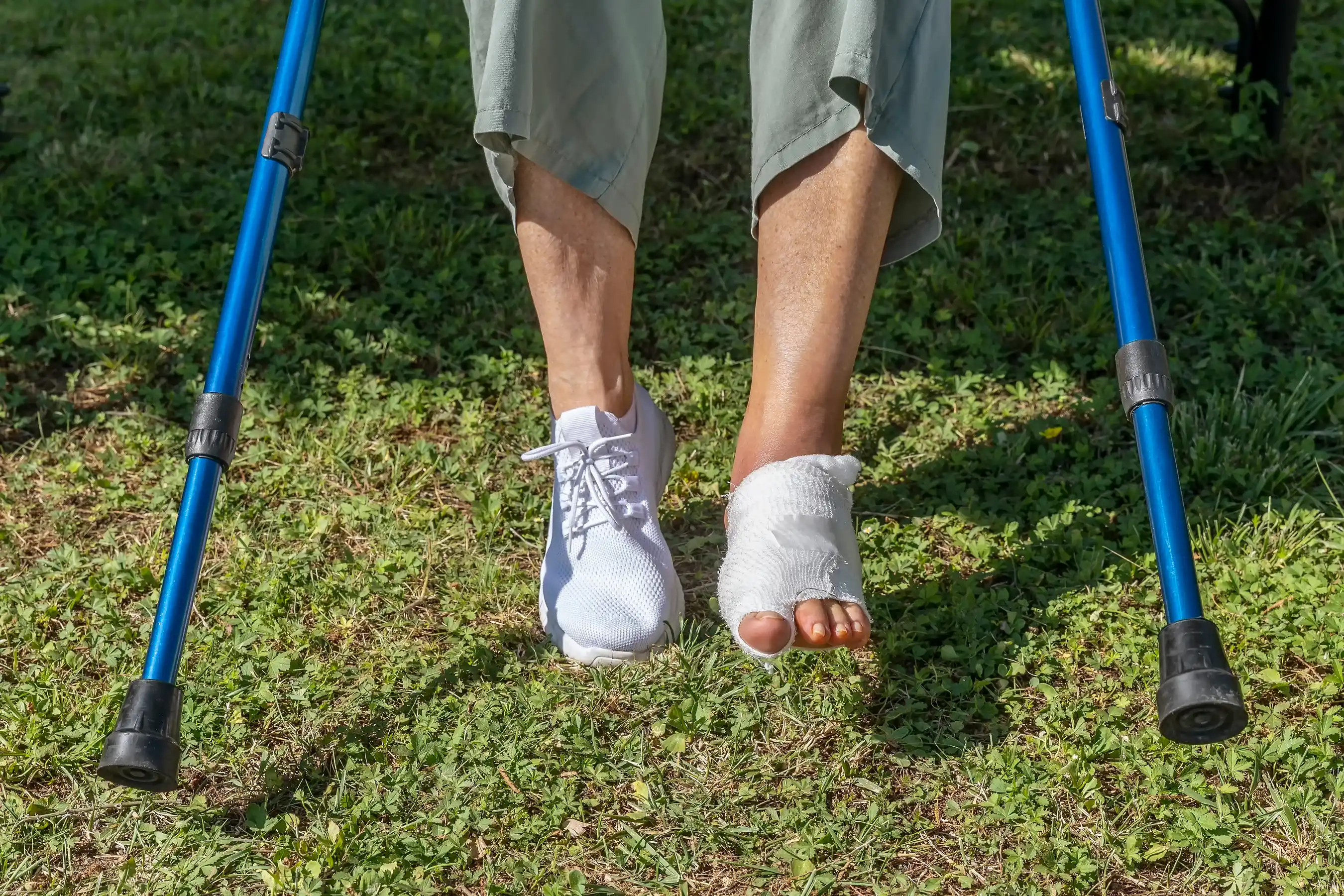
Key Takeaways
- Most people return to normal walking gradually over a few months after bunion surgery, not all at once.
- After Lapiplasty®, patients in a large study began putting protected weight on the foot in a walking boot after about one week, on average.
- Walking in a boot, walking in regular shoes, and returning to full activity are three different milestones.
- Healing speed depends on the type of surgery, your overall health, smoking, and how closely you follow your care plan.
- Lake Erie Podiatry offers Lapiplasty® 3D Bunion Correction in Erie, PA, and you can request an appointment online to talk through your own recovery timeline.
When Weight-Bearing Typically Begins After Lapiplasty®?
'Weight-bearing' means putting some or all of your body weight on your foot. It is the first step toward walking again.
With many traditional bunion surgeries, patients must keep weight off the foot for weeks. Lapiplasty® 3D Bunion Correction is different. In a four-year study called ALIGN3D, summarized on the Treace Medical Concepts Lapiplasty® journal publications page, patients:
- Began protected weight-bearing in a walking boot at about 7.7 days, on average.
- Returned to work in about 27 days, on average.
- Returned to full, unrestricted activity within about four months, on average.
'Protected' weight-bearing means you walk with your foot inside a boot that keeps it stable while it heals. Treace makes the Lapiplasty® system, so Dr. Ruiz will let you know what timeline makes sense for your foot.
A Realistic Bunion Surgery Recovery Timeline
Every recovery is different, but most follow the same general stages.
Days 1 to 14: Rest and Protect
Most bunion surgeries are outpatient, so you go home the same day. For the first two weeks, the focus is on rest, keeping your foot raised, and controlling swelling. After Lapiplasty®, many patients begin short, careful steps in a walking boot during this stage.
Weeks 2 to 6: Walking in a Boot
Your incision heals, and stitches that do not dissolve on their own are usually removed around two weeks. You will likely walk around the house in your boot and slowly do more each week. Many people return to desk work during this stage.
Weeks 6 to 12: Bones Keep Healing
Cleveland Clinic's bunion surgery recovery guide explains that bones take about six to 12 weeks to heal. During this time, Dr. Ruiz may move you from the boot into a supportive shoe.
Months 3 to 4: Back to Your Usual Routine
Cleveland Clinic notes that most people can resume their usual physical activities after about three months. You may need physical therapy (PT) to rebuild strength and flexibility in your foot.
Months 6 and Beyond: Swelling Fades
Swelling can last six to nine months after bunion surgery. It is normal for your foot to swell after a long day, even when you feel back to normal.
How Recovery Differs From Traditional Bunion Surgery Timelines?
The table below compares a traditional Lapidus fusion with Lapiplasty®. The traditional timeline comes from the American Orthopaedic Foot & Ankle Society's Lapidus procedure guide. The Lapiplasty® timeline comes from the ALIGN3D study averages.
| Recovery Milestone | Traditional Lapidus Fusion | Lapiplasty® 3D Bunion Correction |
|---|---|---|
| First two weeks | Splint or boot, often with weight kept off the foot | Protected weight-bearing in a boot at about 7.7 days |
| Full weight in a boot or post-op shoe | Around 6 weeks | Earlier, as directed by your surgeon |
| Return to work | Varies by job | About 27 days |
| Return to normal activity | About 4 to 6 months | Within about 4 months |
| Leftover swelling | Can last up to a year | Can last for months |
Even when you can walk sooner, your bones still need time to fuse. That is why following your surgeon's instructions matters so much.
Factors That Can Speed Up or Slow Down Healing
Some parts of recovery are out of your control, but many are not. These factors can make a difference:
- Following weight limits: Cleveland Clinic warns that putting too much weight on your foot before the bones heal can undo some types of bunion surgery.
- Smoking: The American Orthopaedic Foot & Ankle Society notes that people who smoke have a higher risk of the bones not healing together.
- Diabetes: Diabetes also raises the risk of bones not healing, so keeping blood sugar steady supports recovery.
- Swelling control: Rest, ice, compression, and raising your foot help reduce swelling.
- The right support: Depending on your healing, Dr. Ruiz may recommend surgical shoes, crutches, a cane, or custom foot orthotics from Lake Erie Podiatry.
- Your job: People with jobs that require standing or walking all day may need more time before returning to work.
What Normal Walking Actually Means vs. Full Activity?
Many people ask, 'When can I walk normally?' The answer depends on what 'normally' means to you:
- Walking in a boot: Often within the first week or two after Lapiplasty®.
- Walking in regular shoes: Usually after the bones have had time to heal and your surgeon clears you.
- Full activity, like running or sports: Often around three to four months, and sometimes longer.
Walking barefoot is a step your surgeon should approve. Bare feet have no support, so most people wait until they are comfortable in regular shoes first.
When to Check In With Your Podiatrist During Recovery?
A podiatrist is a doctor who specializes in the foot and ankle. Dr. Michael Ruiz, DPM (Doctor of Podiatric Medicine), will schedule follow-up visits to make sure your foot is healing and staying in the right position.
Call your podiatrist right away if you notice:
- A fever higher than 101 degrees Fahrenheit.
- Bleeding.
- A surgical dressing that loosens, falls off, or gets wet.
- Redness, warmth, odor, or drainage at the incision.
- New or worsening pain.
Get a Personal Lapiplasty® Recovery Plan From Lake Erie Podiatry
Most people can walk in a boot within the first couple of weeks after Lapiplasty® and return to normal walking and activity over a few months. Lake Erie Podiatry guides you through each stage so you know what to expect and when.
Request an appointment with Lake Erie Podiatry at its Erie office on Caughey Road to talk about Lapiplasty® 3D Bunion Correction in Erie, PA, and your recovery timeline. Request your appointment with Lake Erie Podiatry online.
Frequently Asked Questions
When can I walk barefoot after bunion surgery?
There is no set date for everyone. Most people wait until their bones have healed and they are comfortable walking in regular, supportive shoes. Always get your surgeon's okay before walking barefoot.
What is the Lapiplasty® recovery time?
In the ALIGN3D study, patients began protected weight-bearing in a boot at about one week, returned to work in about four weeks, and returned to full activity within about four months, on average.
What is the typical bunion surgery recovery timeline?
Most people recover over a few months. Bones take about six to 12 weeks to heal, many people return to usual activities around three months, and swelling can last six to nine months.
What is Lapiplasty®?
Lapiplasty® is a 3D bunion surgery that corrects the bunion in all three directions by fixing the unstable joint behind it. This approach is designed to address the root cause of the bunion.
Where can I get bunion surgery in Erie, PA?
Lake Erie Podiatry offers bunion surgery, including Lapiplasty® 3D Bunion Correction, at its office on Caughey Road in Erie, PA.
