
Key Takeaways
- You may need custom orthotics if you have foot pain during everyday activities, sharp morning heel pain, uneven shoe wear, or arches that hurt.
- Custom orthotics are often used to help manage conditions like plantar fasciitis, flat feet, bunions, tendinitis, and diabetes-related foot problems.
- A podiatrist decides whether you need orthotics by examining your feet, watching how you walk, and looking at your shoes.
- Sometimes a store-bought insert is enough, and a foot exam can tell you whether custom orthotics are worth it.
- Lake Erie Podiatry has helped Erie-area patients with foot and ankle problems for nearly 25 years, so request an appointment online with Lake Erie Podiatry to find out if custom orthotics are right for you.
8 Common Signs That Custom Orthotics Could Help
Foot pain is easy to brush off. But some signs suggest your feet need more support than your shoes can give. Cleveland Clinic's guide to orthotics lists several of these signs.
1. Your Feet Hurt or Swell During Everyday Activities
Pain and swelling during or after normal activities, like walking or standing at work, is one of the most common reasons people look into orthotics.
2. You Have Sharp Heel Pain First Thing in the Morning
Stabbing heel pain with your first steps out of bed may point to plantar fasciitis. This is an irritation of the thick band of tissue along the bottom of your foot.
3. Your Flat Feet or High Arches Cause Pain
Flat feet or high arches don't always cause problems. But if they lead to pain or make your foot roll inward when you walk (called overpronation), orthotics may help.
4. Your Shoes Wear Down Unevenly
Take a look at the bottoms of your favorite shoes. If one side wears down much faster than the other, it may be a sign of how your feet move when you walk.
5. You Have Balance Problems
Collapsed arches can affect your balance and, in some cases, lead to falls.
6. A Recent Injury Changed the Way You Walk
A recent lower leg injury can change your gait, which is the way you walk. Orthotics may help support your feet while you recover. For athletes, sports medicine care at Lake Erie Podiatry can address the injury itself.
7. You Have Diabetes-Related Foot Problems
Diabetes can affect the nerves and blood flow in your feet. Soft, cushioning orthotics can help relieve pressure on areas at risk for sores.
8. Store-Bought Inserts Aren't Helping
Cleveland Clinic notes that podiatrists may first suggest an OTC (over-the-counter) insert for mild symptoms. If your symptoms continue or get worse, a custom orthotic may be the next step.
Conditions Custom Orthotics Are Often Used to Manage
Orthotics don't cure foot conditions, but they can help manage symptoms. Here are some of the most common conditions podiatrists treat with orthotics:
| Condition | What It Is | How Orthotics May Help |
|---|---|---|
| Plantar fasciitis | Irritation of the tissue along the bottom of the foot, often causing heel pain | Supports the arch and eases strain on the heel |
| Flat feet | Little or no arch when standing | Adds arch support and may reduce strain from overpronation |
| High arches | An arch that is higher than usual | Spreads pressure more evenly across the foot |
| Bunions | A bony bump at the base of the big toe | Helps relieve pressure and improve foot alignment |
| Tendinitis | Irritation of a tendon | Functional orthotics help control foot motion |
| Diabetic foot ulcers | Open sores, often in areas that rub or press against shoes | Soft orthotics cushion and offload pressure |
| Forefoot pain (metatarsalgia) | Pain in the ball of the foot | Cushions and redistributes pressure |
The American Podiatric Medical Association notes that clinical research has shown podiatrist-prescribed orthotics can reduce foot pain and improve function.
If ongoing discomfort is your main concern, learn more about foot pain treatment at Lake Erie Podiatry.
What a Foot and Gait Evaluation Looks Like
Custom orthotics at Lake Erie Podiatry start with a thorough evaluation of your feet, gait, and footwear. While every visit is tailored to the patient, here's what this type of exam usually includes:
- A conversation about your symptoms.Your podiatrist will ask where it hurts, when it started, and what makes it better or worse.
- Your health history. Conditions like diabetes or past injuries can affect which treatment is safest.
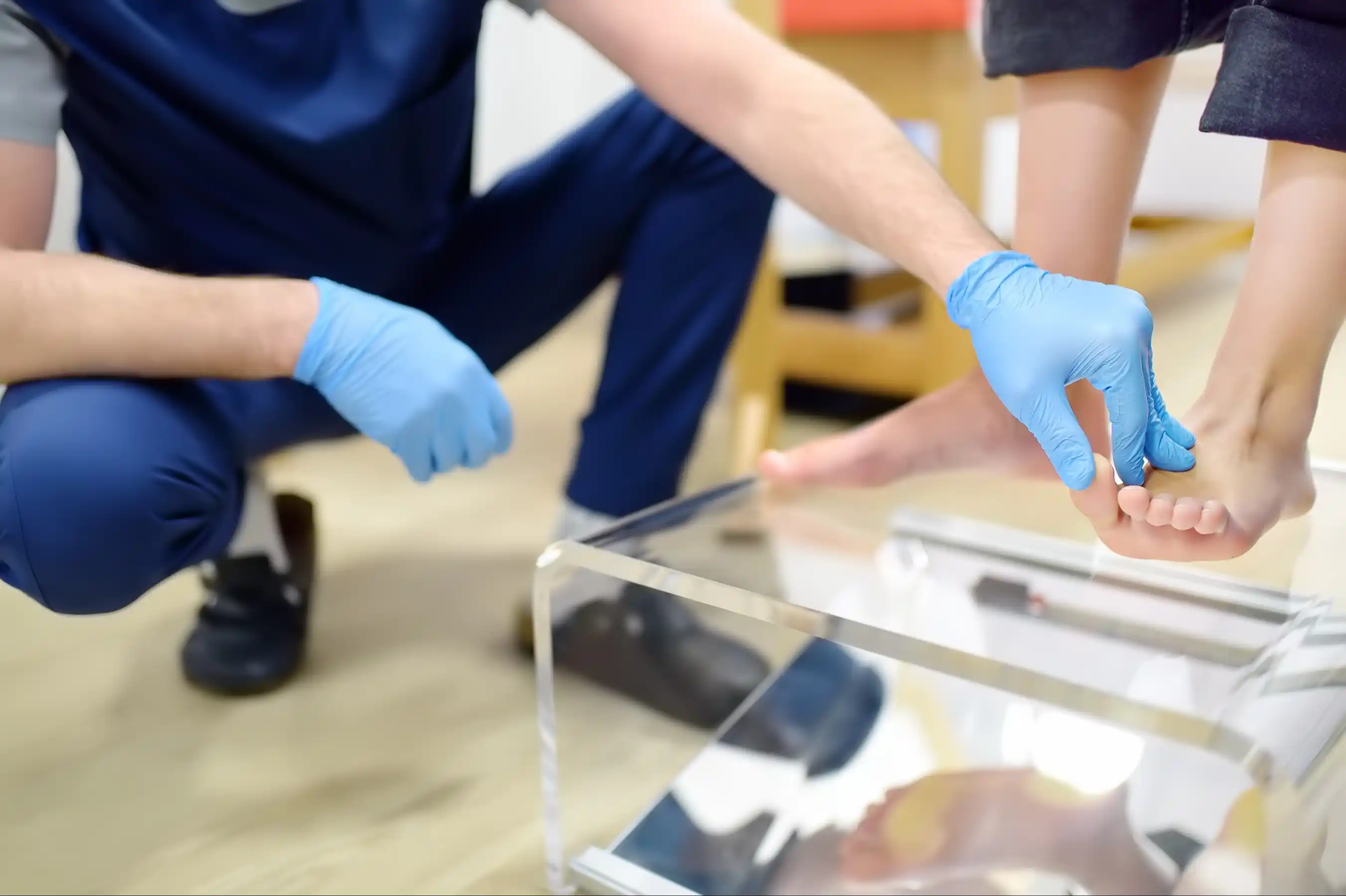
- A hands-on foot and ankle exam. This helps your podiatrist check the structure and movement of your feet.
- A look at how you walk. Watching your gait shows how your feet move with each step.
- A check of your shoes. Wear patterns and fit can offer helpful clues.
If orthotics are needed, your podiatrist will capture the shape of each foot. The APMA explains that a 3D image of each foot, along with any measurements, is used to create supports made just for you.
How a Podiatrist Determines the Right Type of Orthotic?
Not every foot problem calls for the same device. Your podiatrist will consider:
- Your diagnosis. Is the pain caused by how your foot moves, by pressure on a sensitive area, or both?
- Your activity level. Runners, people who stand all day, and less active adults may need different support.
- Your overall health. People with diabetes often need softer, cushioning materials.
- Your shoes. The orthotic has to fit the footwear you wear most.
Based on these factors, your podiatrist may recommend a functional orthotic, which is semi-rigid and helps control motion, or an accommodative orthotic, which is softer and cushions pressure points.
Dr. Michael Ruiz, DPM (Doctor of Podiatric Medicine), blends a conservative approach with other treatment options. That means you'll get an honest answer about whether custom orthotics, a store-bought insert, or another treatment makes the most sense.
What to Expect If Orthotics Are Recommended
If custom orthotics are part of your plan, here's a quick look at what comes next:
- Getting used to them: It typically takes 2–4 weeks for your feet to adjust. Start with a few hours a day and build up to full-day wear.
- Follow-up visits: Regular check-ups help make sure your orthotics still fit and work well.
- Replacement: On average, custom orthotics last 1–3 years, depending on the materials, how often you wear them, and your activity level.
- Insurance: Many plans will partly or fully cover custom orthotics when they're medically necessary. Coverage varies, so check with your provider first.
Ask an Erie Podiatrist Whether Custom Orthotics Fit Your Needs
Ongoing foot pain, uneven shoe wear, and arch problems are all signs your feet may need more support. A foot and gait evaluation is the clearest way to know whether custom orthotics will help.
Get answers about custom foot orthotics at Lake Erie Podiatry and request an appointment online with Lake Erie Podiatry today.
Frequently Asked Questions
Do I need custom orthotics, or will store-bought inserts work?
Store-bought inserts may be enough for mild aches or extra cushioning. If your pain is ongoing, getting worse, or linked to diabetes or a specific condition, a podiatrist can tell you whether custom orthotics are a better choice.
What are the signs you need orthotics?
Common signs include foot pain during daily activities, sharp morning heel pain, flat feet or high arches that hurt, uneven shoe wear, balance problems, and diabetes-related foot problems.
Where can I get foot orthotics near me?
If you live in or near Erie, PA, Lake Erie Podiatry provides custom foot orthotics at its office on Caughey Road. Each pair is made after a full evaluation of your feet, gait, and footwear.
How do I find a podiatrist in Erie, PA?
Lake Erie Podiatry has served the Erie region for nearly 25 years. The practice typically sees new patients within a short period of time, and you can request an appointment online or by phone.
Can orthotics help with knee or back pain?
Sometimes. According to Cleveland Clinic's guide to flat feet, flat feet can change the way you walk and, over time, may lead to pain in your knees, hips, or lower back. A podiatrist can check whether your feet are part of the problem and if orthotics may help.
