
Key Takeaways
- Custom orthotics are medical devices made to match the shape of your feet and the way you move, while store-bought inserts are mass-produced in standard sizes.
- Store-bought inserts can add cushioning and arch support for mild aches, but they can't correct how your foot functions.
- Custom orthotics usually cost more up front, but they are made from sturdier materials and tend to last longer.
- If you have ongoing foot pain, diabetes, or a condition like plantar fasciitis, it's best to see a podiatrist before choosing an insert.
- Lake Erie Podiatry has cared for patients in the Erie region for nearly 25 years, so request an appointment online with Lake Erie Podiatry to find out which option is right for your feet.
Why Aren’t All Shoe Inserts the Same?
Walk down the foot care aisle at any pharmacy or sporting goods store, and you'll see dozens of insoles. Some even use the word 'custom' on the box. So how do you know what you're actually getting?
The American Podiatric Medical Association's guide to prescription orthotics and shoe inserts explains that any device not prescribed by a doctor and made for your specific foot is a shoe insert, not a custom orthotic, no matter what the packaging says.
Here are two terms that will come up often in this article:
- Orthotic: A device you wear inside your shoe to support, cushion, or align your foot. A custom orthotic is prescribed and made just for you.
- Podiatrist: A doctor who specializes in the foot and ankle.
How Are Custom Orthotics Designed Around Your Feet and Gait?
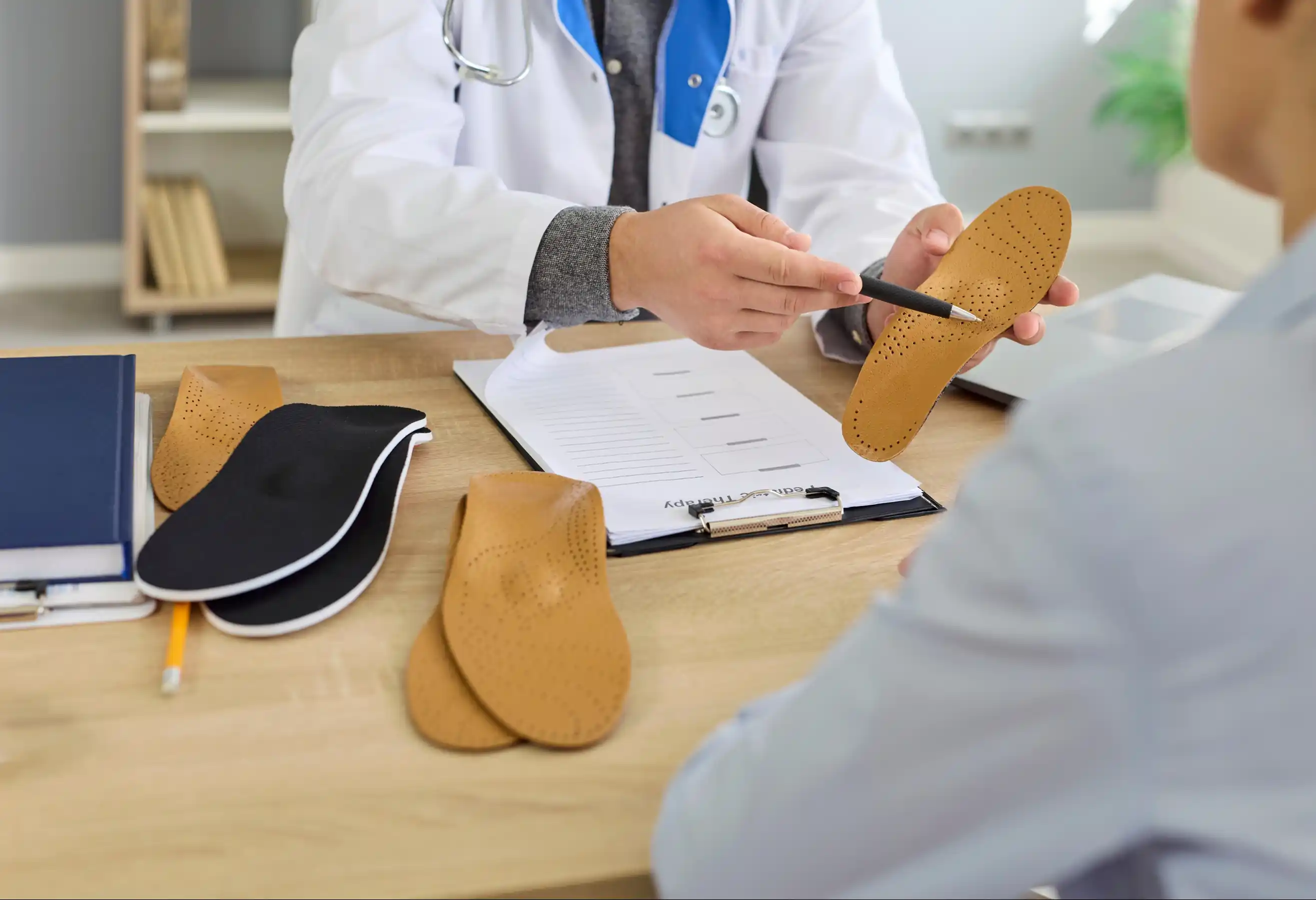
Custom orthotics start with an exam, not a shopping trip. At Lake Erie Podiatry, custom orthotics are made after a thorough evaluation of your feet, your gait (the way you walk), and your footwear. That information helps shape a device that matches the contours of your feet and any specific medical needs you have.
To capture the shape of your feet, providers may use a plaster mold, a foam impression box, or a computer scan that creates a 3D image, according to Cleveland Clinic's overview of orthotics.
Functional vs. Accommodative Custom Orthotics
Custom orthotics generally fall into two groups:
- Functional orthotics are made of semi-rigid materials like plastic, graphite, or carbon fiber. They help control the way your foot moves, which can ease pain and strain.
- Accommodative orthotics are made of softer, cushioning materials. They help relieve pressure on sensitive areas, such as sores or foot ulcers.
What Store-Bought Inserts Can and Can't Do
Store-bought inserts are also called over-the-counter (OTC) inserts, which means you can buy them without a prescription. Common types include:
- Arch supports, which have a raised area to support the arch of your foot
- Insoles, which add cushioning and are often made of gel, foam, or plastic
- Heel liners, also called heel cups or heel pads, which cushion the heel
- Foot cushions, which act as a barrier where your shoe rubs
OTC inserts can work well for minor pain and swelling caused by mild conditions. Cleveland Clinic suggests choosing one with a firm arch that doesn't easily give.
However, inserts have limits. According to the APMA (American Podiatric Medical Association), shoe inserts can cushion and support your feet, but they can't correct biomechanical problems (issues with how your foot moves) or cure long-standing foot issues.
If you do buy inserts, a few simple steps help:
- Bring the shoes you plan to wear them in.
- Try them on and walk around before you buy.
- Don't assume pressure or rubbing will go away over time.
- If you have diabetes or poor circulation, see a podiatrist before trying OTC inserts.
Custom Orthotics vs. Store-Bought Insoles: Side-by-Side
| Feature | Custom Orthotics | Store-Bought Inserts |
|---|---|---|
| How they're made | Prescribed after a foot exam and made for your feet | Mass-produced in standard sizes |
| Fit | Matches the contours of each foot | General fit based on shoe size |
| Materials | Durable materials chosen for your needs, from semi-rigid to soft | Usually gel, foam, or plastic |
| What they do | Support, align, and cushion based on your condition | Add comfort, cushioning, and basic arch support |
| How long do they last? | About 1–3 years on average, depending on use | Tend to wear out sooner |
| Cost | Higher up front; insurance may help if medically necessary | Lower up front; paid out of pocket |
| Best for? | Ongoing pain, diabetes-related foot issues, or problems with how your foot moves | Mild aches or extra cushioning |
Why Do Fit and Materials Matter for Long-Term Support?
A good orthotic has to do its job every day, for months and years. Lake Erie Podiatry crafts custom orthotics with high-quality materials to provide the right balance of support, alignment, and cushioning.
Cleveland Clinic notes that several things affect how long a custom orthotic lasts:
- Material: Rigid materials like plastic may last longer.
- Activity level: High-impact activities like running can wear them down faster.
- Weight changes: A big gain or loss may mean you need a new pair sooner.
- Care: Cleaning them often and keeping them away from extreme heat or cold helps them last.
A poor fit can be more than uncomfortable. When an insert doesn't match your foot, it may put pressure in the wrong places or fail to support the areas that need it most.
Conditions Where Custom Orthotics Make a Bigger Difference
Custom orthotics are often recommended when foot pain is ongoing or tied to a specific condition. These may include:
- Plantar fasciitis, an irritation of the band of tissue along the bottom of the foot that often causes heel pain
- Flat feet or high arches that cause pain
- Bunions, a bony bump at the base of the big toe
- Tendinitis, or irritation of a tendon
- Diabetes-related foot problems, such as ulcers (open sores) or painful calluses
- Sports-related injuries
If you're dealing with chronic foot pain treated at Lake Erie Podiatry or need diabetic foot care in Erie, PA, custom orthotics may be one part of your treatment plan.
A Note About Orthopedic Insoles for Flat Feet
Orthopedic insoles for flat feet are one of the most popular OTC products. But many people with flat feet never have symptoms and don't need treatment at all, according to Cleveland Clinic's guide to flat feet.
For flat feet that do cause aches, orthotic inserts are one conservative option, along with stretching and strengthening exercises. Cleveland Clinic also notes that research on orthotics for adult flat feet is still limited. That's why it helps to have a podiatrist find out what's actually causing your pain before you buy another pair of insoles.
How to Know Which Option Fits Your Situation
A store-bought insert may be a reasonable first step if:
- You want a little extra cushioning or arch support.
- Your discomfort is mild and goes away with rest.
- You're generally healthy and don't have diabetes or circulation problems.
It's time to see a podiatrist if:
- Your pain is severe, keeps coming back, or is getting worse.
- Store-bought inserts haven't helped.
- You have diabetes, poor circulation, or a history of foot sores.
- Your pain is changing the way you walk.
Find the Right Fit With Custom Orthotics in Erie, PA
Store-bought inserts can offer comfort, but custom orthotics are designed around your feet, your gait, and your health needs. A podiatrist can help you decide which one will actually solve your problem.
Ready to stop guessing in the insole aisle? Learn more about custom foot orthotics at Lake Erie Podiatry, then request an appointment online with Lake Erie Podiatry to get started.
Frequently Asked Questions
Where can I get custom orthotics near me in Erie, PA?
Lake Erie Podiatry offers custom orthotics at its office at 3910 Caughey Road, Suite 130, in Erie, PA. Each pair is made after an evaluation of your feet, gait, and footwear.
Are orthotics better than insoles?
It depends on your needs. Insoles can help with mild aches and extra cushioning. Custom orthotics are made for your feet and are often a better fit for ongoing pain or specific foot conditions.
What does a podiatrist do for orthotics?
A podiatrist examines your feet, watches how you walk, and asks about your symptoms and health history. If orthotics are a good fit, they capture the shape of your feet so the devices can be made for you.
Do orthopedic insoles for flat feet really work?
They can ease mild aches for some people. However, many people with flat feet don't need treatment, and research on orthotics for adult flat feet is limited. A podiatrist can help you decide if insoles or other treatments make sense.
Does insurance cover custom orthotics?
Coverage varies by insurance company and plan. Many plans will partly or fully cover custom orthotics when they're medically necessary. Lake Erie Podiatry recommends checking with your insurance provider before your visit.
